Physical
Spaces, objects, and material things a person touches.
- The store floor
- The packaging
- The device in hand
A physical claim Customer scans the QR code at the locker.
GoodsPHD, the first product on GoodsOS, maps a product journey across Physical, Human, and Digital. Every claim your team treats as a fact gets named, so you can see which ones nobody has tested.
Most journey maps collapse them together, so they miss the seams: the handoffs between layers, where experiences break down. GoodsPHD maps all three explicitly.
Spaces, objects, and material things a person touches.
A physical claim Customer scans the QR code at the locker.
People, relationships, roles, service moments, and the emotional read of each.
A human claim Driver hand-off feels safe to the customer.
Software, data, screens, and connected systems. Every digital layer of an experience.
A digital claim App walks them through pickup steps.
PHD names the three layers. Stages show how an experience moves through them. Five is typical. Some take six or seven. The physical, human, and digital threads run through every one.
Most product failures are assumption failures, not execution failures. Label every claim with its state and you can see which beliefs the build is resting on.
An untested belief about what's true or what will happen.
Untested Customers will scan the QR code at the locker.
Framed so that evidence can confirm or reject it.
Testable With QR at eye level, 80% of customers scan within 3 seconds.
Evidence confirms it. Now safe to build from.
Confirmed 87% scan rate measured at eye-level placement.
Evidence rejects it. Better to learn now than after launch.
Rejected Push notifications drive return visits. No measurable lift.
States 03 and 04 are alternative outcomes. Every hypothesis ends in one or the other.
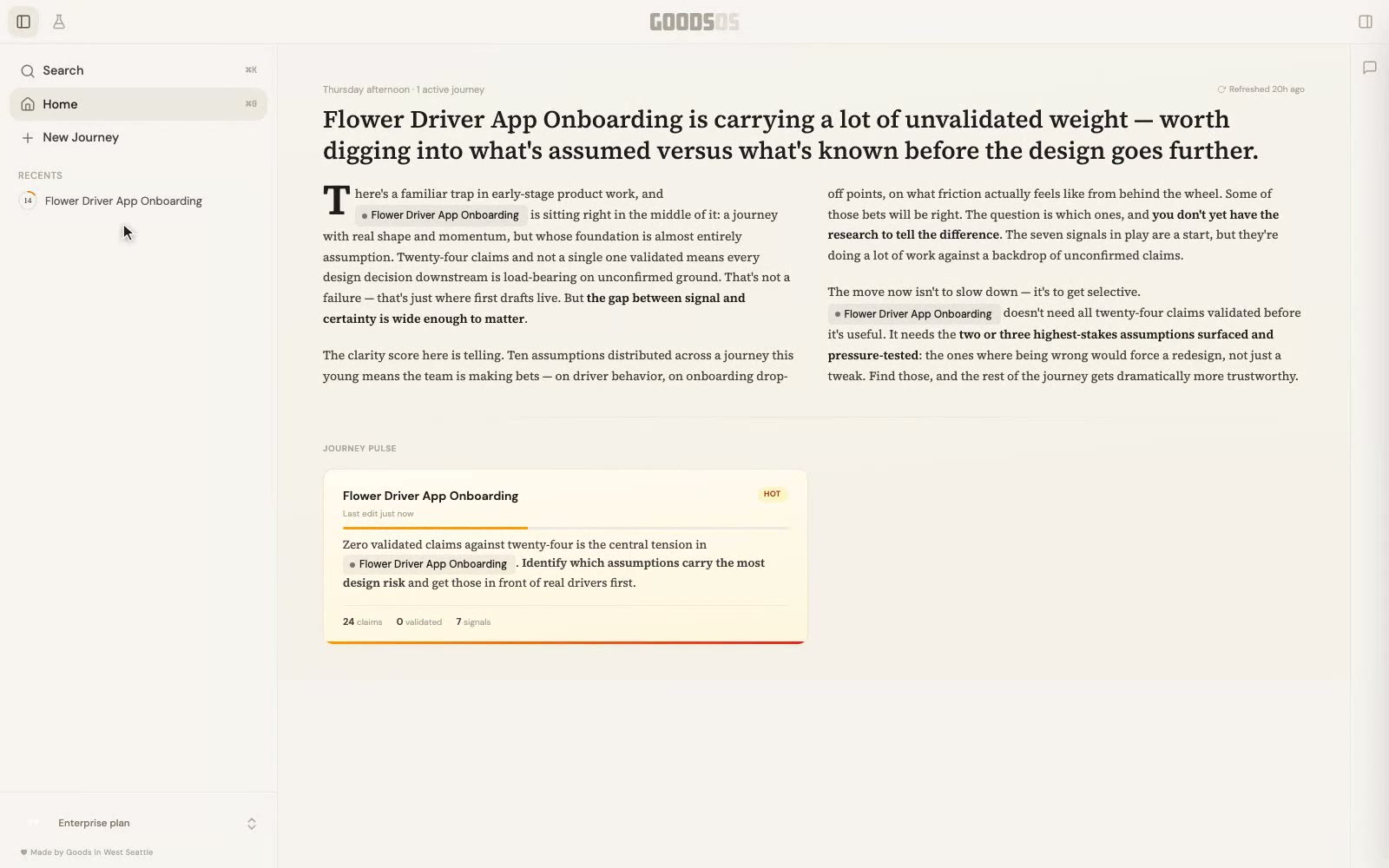
Three of the surfaces you'll work in, up close. Each one keeps the reasoning attached to the claim instead of in someone's head.
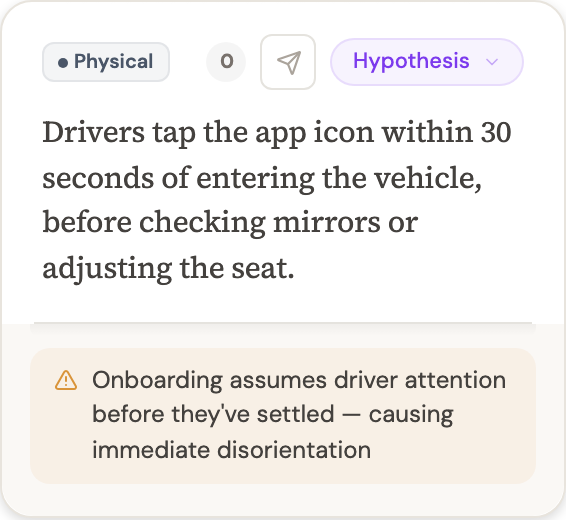
Each claim shows whether it has been tested, and the evidence attaches to it directly. You see the reasoning, not just the conclusion.
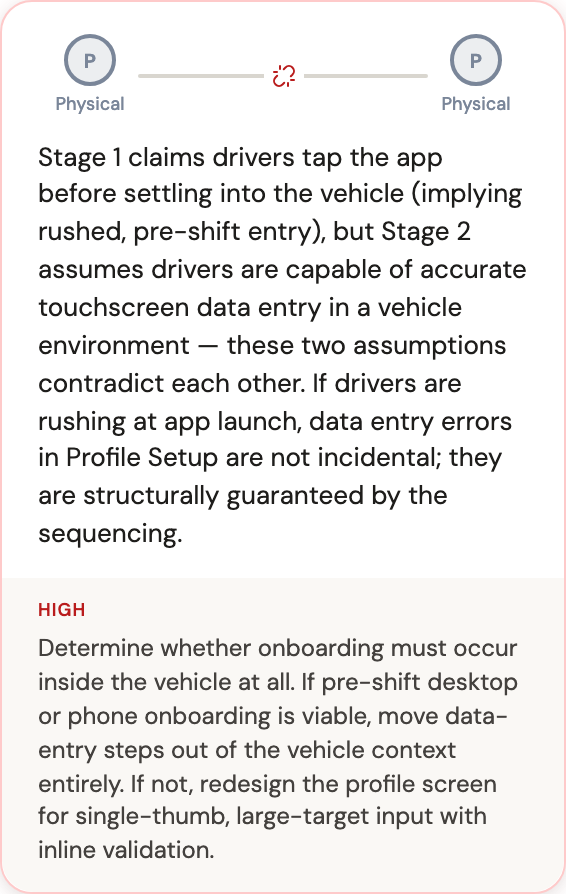
A seam is where one layer hands off to another: physical to digital, human to physical. The AI flags the ones under strain, and your team decides what to do about it.
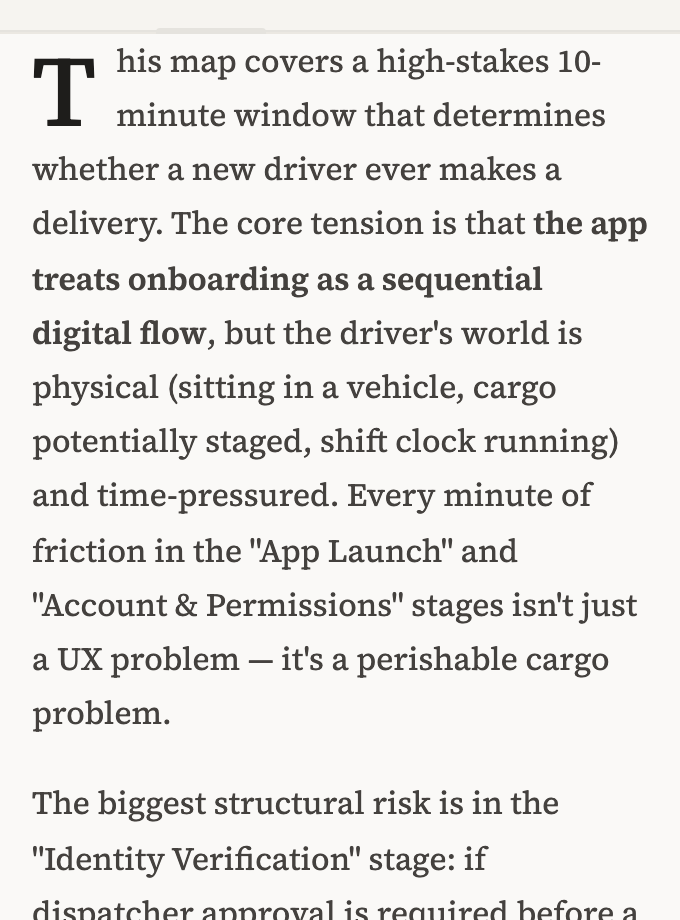
An editor's-voice synthesis of your map. It names the structural risks and where the thin evidence is, so the team can pick what to test next. Built on a method we used before we wrote the software.
We didn't read about this. We lived it. We built this because we kept solving the same problem in big rooms at Best Buy, at Amazon, at T-Mobile. The pattern was the same: smart teams, fuzzy maps, assumptions disguised as decisions. The seam between the store and the app quietly broke the experience. We named it, mapped it, and shipped through it.
PHD is the structure we kept reaching for. Five stages, three layers, every claim labeled. We used it on Best Buy mobile as it grew from a sub-team to a flagship business, and again at Amazon and Disney. GoodsPHD is that structure as a tool, for teams who don't have us in the room.
Goods is what we'd hand a younger version of ourselves walking into one of those rooms today.
Name it.
Map it.
Ship through it.
If you've ever shipped a journey map and watched the team argue over which assumptions actually got tested — that's what this fixes.
We're inviting a small group of teams. Drop your email and we'll send your access link as soon as we're ready.
Thanks. We'll be in touch at when we're ready to send your invite.